- Home
- Fire Rebuild Guide
Fire rebuild guide
Rebuilding after a wildfire: what to know.
The steps from cleared lot to finished home, the state rule that can keep your property taxes where they were, and the local programs that apply in Ventura County and Malibu.
Last reviewed November 2026. General information, not legal advice; local rules change, so confirm requirements with your city or county before you design.
The steps of a rebuild
- Debris removal and site clearance, through a government program or privately, including soil testing where required.
- Survey and assessment. A surveyor confirms property lines; an engineer evaluates whether any foundation or slab can be reused. For example, one Ojai Thomas Fire rebuild kept the original slab and tied in new slab sections.
- Insurance review. Understand your dwelling, other structures, code-upgrade and additional living expense coverage. A detailed, itemized construction estimate helps you work with your adjuster.
- Design. Decide whether to rebuild like-for-like or change the design. Like-for-like rebuilds often qualify for faster review and fee relief.
- Permits. Plans go through plan check, including energy code compliance and wildfire construction requirements where they apply.
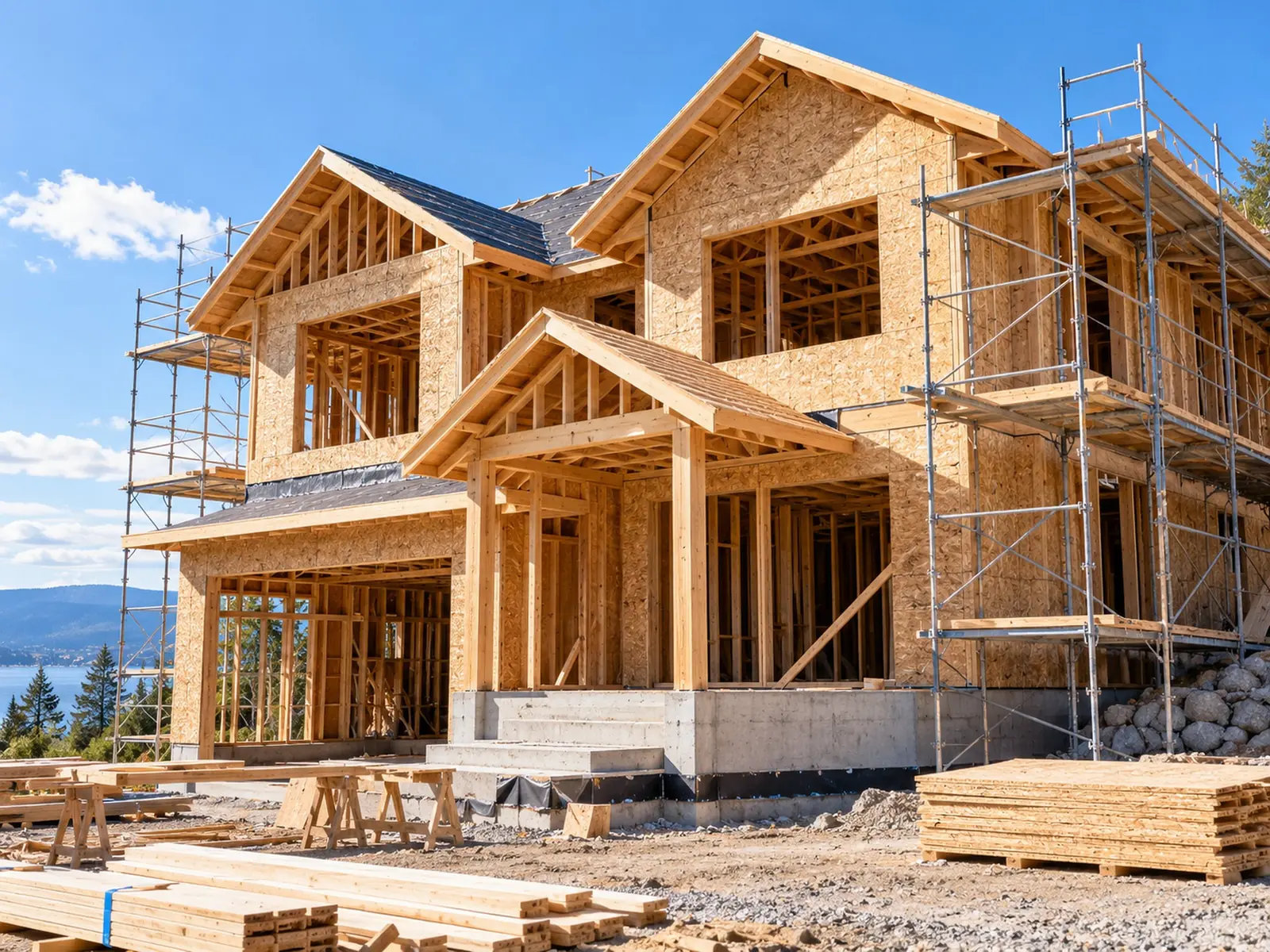
- Construction. Foundation, framing, utilities, roofing, exterior, interior and finishes.
- Final inspection and occupancy.
Property taxes after a disaster
Under Revenue and Taxation Code section 70.5, as explained by the State Board of Equalization, an owner who rebuilds a home destroyed in a Governor-proclaimed disaster on the same parcel, comparable in size, utility and function, keeps the original factored base-year value. Value above 120 percent of the pre-damage value is added as new base-year value, and reconstruction must be completed within five years of the disaster (BOE guidance). Talk to your county assessor about how this applies to your property.
Rebuilding larger
Many families use a rebuild to get the home they wish they had; one Ojai rebuild grew a home from 1,600 to 2,400 square feet. Building larger is often possible but can affect fee waivers, streamlined approvals and the property tax treatment above. For the January 2025 fires, including Palisades, Executive Order N-4-25 suspended CEQA and the Coastal Act for rebuilds in substantially the same location and no larger than 110 percent of the prior footprint and height (summary of EO N-4-25). Executive Order N-29-25 also temporarily waived certain solar and battery requirements for homes rebuilt after those fires, though they must still be solar-ready (CEC).
Local programs and fee waivers
- Mountain Fire (Nov. 2024), unincorporated Camarillo and Somis: the fire destroyed 182 homes (County of Ventura). The Board of Supervisors waived rebuild fees for original owners, including expedited plan review, grading and building permits, saving about $20,000 for an average home, through December 2026 (KCLU).
- Thomas Fire (2017), City of Ventura: the city's Thomas Fire Rebuild Overlay Zone expired December 31, 2025, so new applications follow standard zoning and review (see the Ventura page).
- Palisades Fire (2025), Malibu: the city adopted fee waivers for eligible like-for-like rebuilds and opened a Malibu Rebuild Center (see the Malibu page).
Programs change, so confirm current rules with the city or county before design.
Fire hazard maps and wildfire construction
CAL FIRE released updated Fire Hazard Severity Zone maps for Ventura County on March 10, 2025, showing more than 88,000 acres countywide in the Very High zone, 54 percent more than the 2011 maps (ABC7). Homes rebuilt in these zones must meet California's wildfire-resistant construction standards for roofs, vents, eaves, exterior walls, windows, doors and decks (overview). Many rebuilt homes also need fire sprinklers, which can mean upsizing the water line.
Choosing a rebuild contractor
- Verify the contractor's license on the CSLB website and ask for proof of insurance.
- Ask how many new homes they have built or managed. A rebuild is new construction.
- Under California law, a home improvement down payment should not exceed 10 percent of the contract price or $1,000, whichever is less, and you have three days to cancel after signing (CSLB).
- Get itemized bids so you can compare them line by line and share them with your insurer.
Ready to start? Request a free consultation with a licensed local general contractor experienced in new-home construction and rebuilds.
Questions
Frequently asked questions
Will my property taxes go up if I rebuild after a fire?
Under R&T Code 70.5, a comparable rebuild on the same parcel after a Governor-proclaimed disaster keeps the original factored base-year value, as long as it is completed within five years. Value above 120 percent of the pre-damage value is added. Confirm details with your county assessor.
Are there fee waivers for Mountain Fire rebuilds?
Yes. Ventura County waived rebuild fees for original owners, including expedited plan review, grading and building permits, through December 2026.
Can I reuse my foundation?
Sometimes. A structural engineer must evaluate the fire damage. Some rebuilds keep the original slab and tie in new sections.
Do I have to build with fire-resistant materials?
In Fire Hazard Severity Zones, yes. California's wildfire construction standards cover roofs, vents, eaves, walls, windows, doors and decks.
Keep planning
Related services and guides.
Free consultation
Tell us what you are planning.
Share a few details about your home and what you want to change or build. We will connect you with an experienced, licensed local general contractor who handles projects like yours.
- Free consultation and walkthrough of your home
- A licensed general contractor, not a handyman
- No cost or obligation to request a consultation